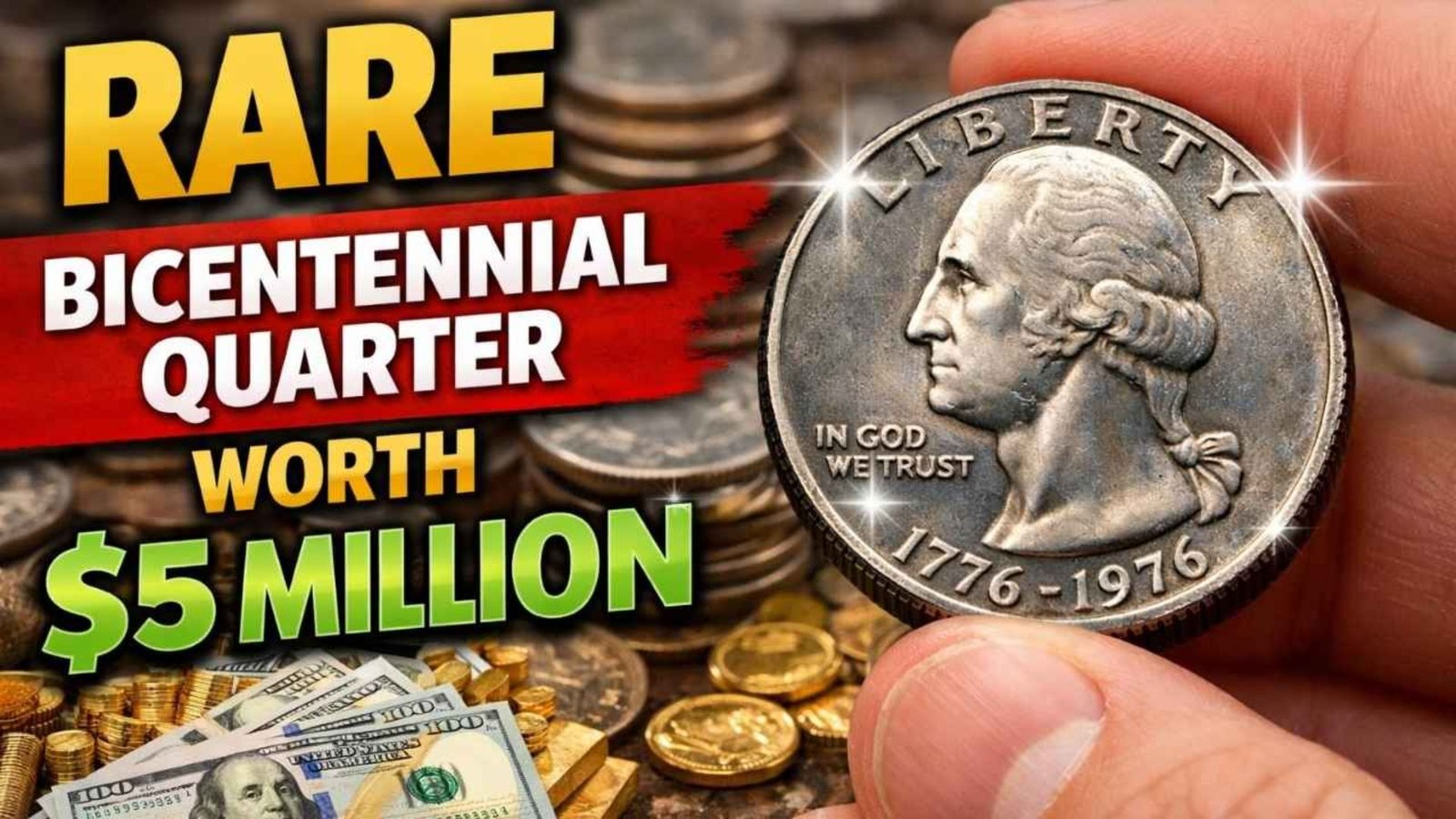
Imagine digging through your pocket change and pulling out a 1976 quarter that could be worth millions. Sounds like a dream, right? The 1976 Bicentennial Quarter, issued to celebrate America’s 200th birthday, features the iconic colonial drummer boy reverse.
While most are worth just 25 cents, rare errors, high-grade examples, and special varieties have sparked huge buzz in the coin collecting world. Some viral stories even claim values up to $5 million. Stick around as we break down the facts, history, and what to look for — you might have a treasure right now!
What Is the Bicentennial Quarter?
The Bicentennial Quarter is a special Washington quarter minted in 1975 and 1976 (dated 1776–1976). It honors the U.S. bicentennial with a unique reverse showing a colonial drummer. Over 1.8 billion were produced, mostly clad (copper-nickel), but some are 40% silver proofs.
History and Background
In the mid-1970s, the U.S. Mint wanted to celebrate the nation’s 200th anniversary. They temporarily replaced the standard eagle reverse with the drummer boy design by Jack L. Ahr. Coins from Philadelphia (no mint mark) and Denver (D) entered circulation, while San Francisco (S) made silver versions for collectors. Production stopped after 1976, making it a short-lived commemorative.
Why It’s Valuable Today
Most Bicentennial quarters are common and worth face value or slightly more in high grades. But rarity comes from:
- Mint errors (like doubled die obverse)
- High-grade MS68+ examples
- Silver proofs
- Rare off-center strikes or wrong planchet errors
Viral claims of $5 million often stem from exaggerated stories or unverified auctions, but real top sales reach thousands — not millions — for exceptional pieces.
How Readers Can Engage and Benefit
Start simple: Grab a magnifying glass and check your change or old jars for 1776–1976 quarters. Look for doubling on “LIBERTY,” unusual mint marks, or pristine condition. If you spot something promising, get it graded by PCGS or NGC. Collectors enjoy the thrill of the hunt, and valuable finds can fund hobbies or turn a profit.
Notable Facts, Statistics, or Records
Here’s a quick comparison table of values:
| Type/Variety | Typical Value (Circulated) | High-Grade/Auction Record | Notes |
|---|---|---|---|
| Standard Clad (P or D) | $0.25–$1 | $5,000 (MS68 toned) | Common in circulation |
| 1976-S Silver Proof | $5–$15 | $19,200 (top grade) | Collector sets only |
| Doubled Die Obverse (DDO) | $200–$1,000 | $8,400 | Look for doubling on letters |
| Off-Center or Wrong Planchet | $100+ | $9,200+ | Rare errors |
Another table of key mintage stats:
| Mint | Mintage (Approx.) | Metal | Special Notes |
|---|---|---|---|
| Philadelphia (no mark) | ~800 million | Clad | Most common |
| Denver (D) | ~860 million | Clad | Slight varieties like filled D |
| San Francisco (S) | ~11 million (silver) | 40% Silver | Proofs for sets |
Expert Tips / Advice
- Use good lighting and a loupe to spot doubling or errors.
- Avoid cleaning coins — it lowers value.
- Check online databases like NGC or PCGS for recent sales.
- Join coin forums or local clubs for free advice.
- Be skeptical of “million-dollar” viral claims; verify with reputable sources.
Frequently Asked Questions (FAQs)
Is there really a Bicentennial Quarter worth $5 million?
No confirmed auction hits that high. Claims often come from hype articles; real rarities top out in the low thousands to tens of thousands.
How do I know if my 1976 quarter is rare?
Check for clear doubling on “LIBERTY,” strong details (no wear), or silver weight (heavier than normal quarters).
Where can I sell a valuable one?
Use eBay, Heritage Auctions, or local dealers after grading.
Are silver Bicentennial quarters worth more?
Yes, especially proofs in top condition.
The Bicentennial Quarter reminds us of America’s history while offering real excitement for collectors. Though a $5 million find is unlikely, rare errors or pristine examples can surprise you with serious value. Dig through your change today — who knows what you’ll uncover? Share this with friends, check your pockets, and dive deeper into rare coins. Happy hunting!