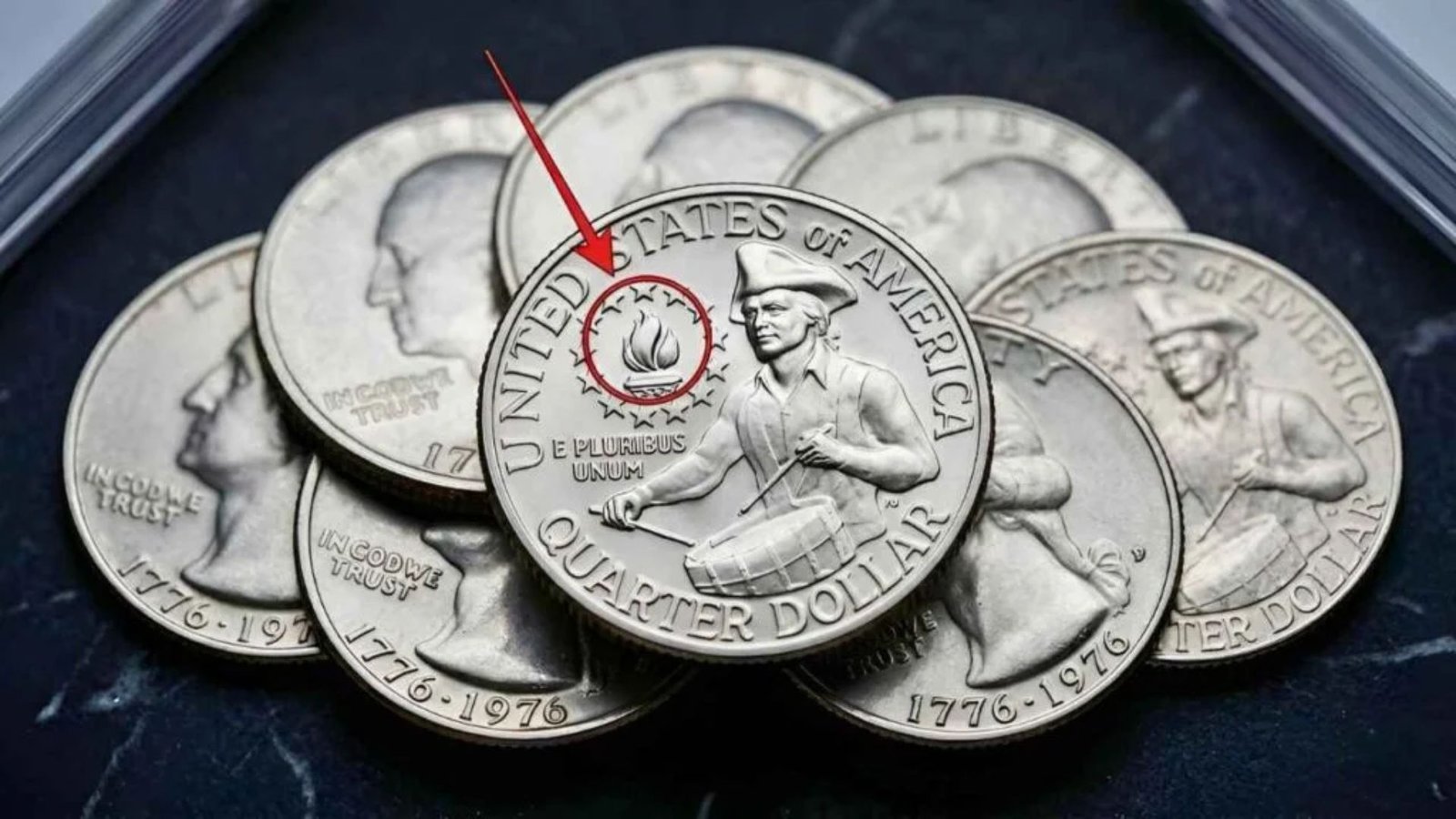
Have you ever dug through your loose change or old coin jar and spotted a 1976 Bicentennial quarter with that cool colonial drummer boy on the back? Most are just worth 25 cents, but in 2026, certain rare Bicentennial errors on these iconic coins are fetching serious money from collectors. Some 1976 drummer boy quarter errors have sold for thousands—or even tens of thousands—in recent auctions.
Stick around as we dive into why these coins are hot right now, what makes some ultra-valuable, and how you might spot a hidden gem in your collection.
What Is the 1976 Drummer Boy Quarter?
The 1776-1976 Bicentennial quarter (nicknamed the Drummer Boy quarter) was issued to celebrate America’s 200th birthday. The obverse shows George Washington with the dual date “1776-1976,” while the reverse features a colonial drummer boy beating a drum, surrounded by 13 stars. Millions were minted, but that’s exactly why the rare ones stand out.
History and Background
In 1975-1976, the U.S. Mint released special reverse designs for the quarter, half dollar, and dollar to mark the Bicentennial. The drummer boy design by Jack Ahr won out for the quarter. Clad versions (copper-nickel) came from Philadelphia (no mint mark) and Denver (D), while 40% silver proofs and uncirculated sets were made in San Francisco (S).
Over 1.6 billion quarters were produced, making common ones plentiful—but errors and varieties create true rarity.
Why It’s Important and Valuable Today
In 2026, renewed interest in American history and error coins has driven prices up. High-grade examples and dramatic Bicentennial quarter errors appeal to hobbyists and investors. While most trade at face value, rare pieces highlight minting mistakes from a massive production run.
Key Rare Errors and Varieties
Look for these on your 1976 drummer boy quarters:
- Doubled Die Obverse (DDO) — Especially the FS-101 variety on 1976-D coins, with noticeable doubling on “LIBERTY,” the motto, and date. FS-102 shows milder doubling on “LIBERTY.”
- Off-center strikes, die cracks, or wrong planchet errors (e.g., struck on a nickel planchet).
- Filled mint marks, 6-finger drummer boy anomalies, or dramatic double strikes.
These rare Bicentennial errors turn a 25-cent coin into a potential windfall.
Value Comparison Table
| Coin Type / Error | Typical Condition | Approximate Value (2026) |
|---|---|---|
| Standard Clad (circulated) | Good | $0.25 |
| High-Grade MS67+ Clad | Uncirculated | $100 – $5,000+ |
| 40% Silver Proof (1976-S) MS69 | Gem | $5,000 – $19,000+ |
| Doubled Die Obverse (FS-101) | MS65+ | $200 – $1,000+ |
| Major Error (off-center, wrong planchet) | Varies | $500 – $28,000+ |
Values fluctuate based on grading (PCGS/NGC) and market demand.
How Readers Can Engage and Benefit
Grab a magnifying loupe and check your coins! Search old jars, rolls, or inherited collections for 1976 Bicentennial quarter errors. If you find something promising, get it graded by PCGS or NGC. Many hobbyists have turned pocket change into cash by spotting varieties. It’s a fun, low-risk way to start coin collecting.
Notable Facts and Statistics
- Over 809 million 1976-D quarters were minted—yet certified DDO varieties number in the low hundreds.
- Top sales include silver examples hitting $19,200 and major errors reaching $28,000+ in recent years.
- The drummer boy design remains one of the most beloved commemorative reverses.
Expert Tips and Insights
Use good lighting and a 5x-10x loupe to spot doubling—machine doubling (flat) isn’t valuable, but true hub doubling (rounded) is. Focus on 1976-D for the best DDO chances. Store coins properly to preserve value, and join online forums for community advice.
Frequently Asked Questions (FAQs)
Are all 1976 quarters valuable?
No—most are face value unless they have errors, high grades, or silver content.
What’s the rarest 1976 Bicentennial error?
Major ones like wrong planchet strikes or strong DDOs command the highest prices.
How do I sell a rare one?
Get it certified first, then use auctions like Heritage or eBay with authentication.
Conclusion
The 1976 Drummer Boy quarter isn’t just pocket change—it’s a slice of American history where rare Bicentennial errors can turn ordinary finds into small fortunes in 2026. Whether you’re a casual hobbyist or serious collector, checking your coins could pay off big. Dig through your stash today, share your discoveries in the comments, or explore more rare coin guides. You never know what treasure might be waiting!