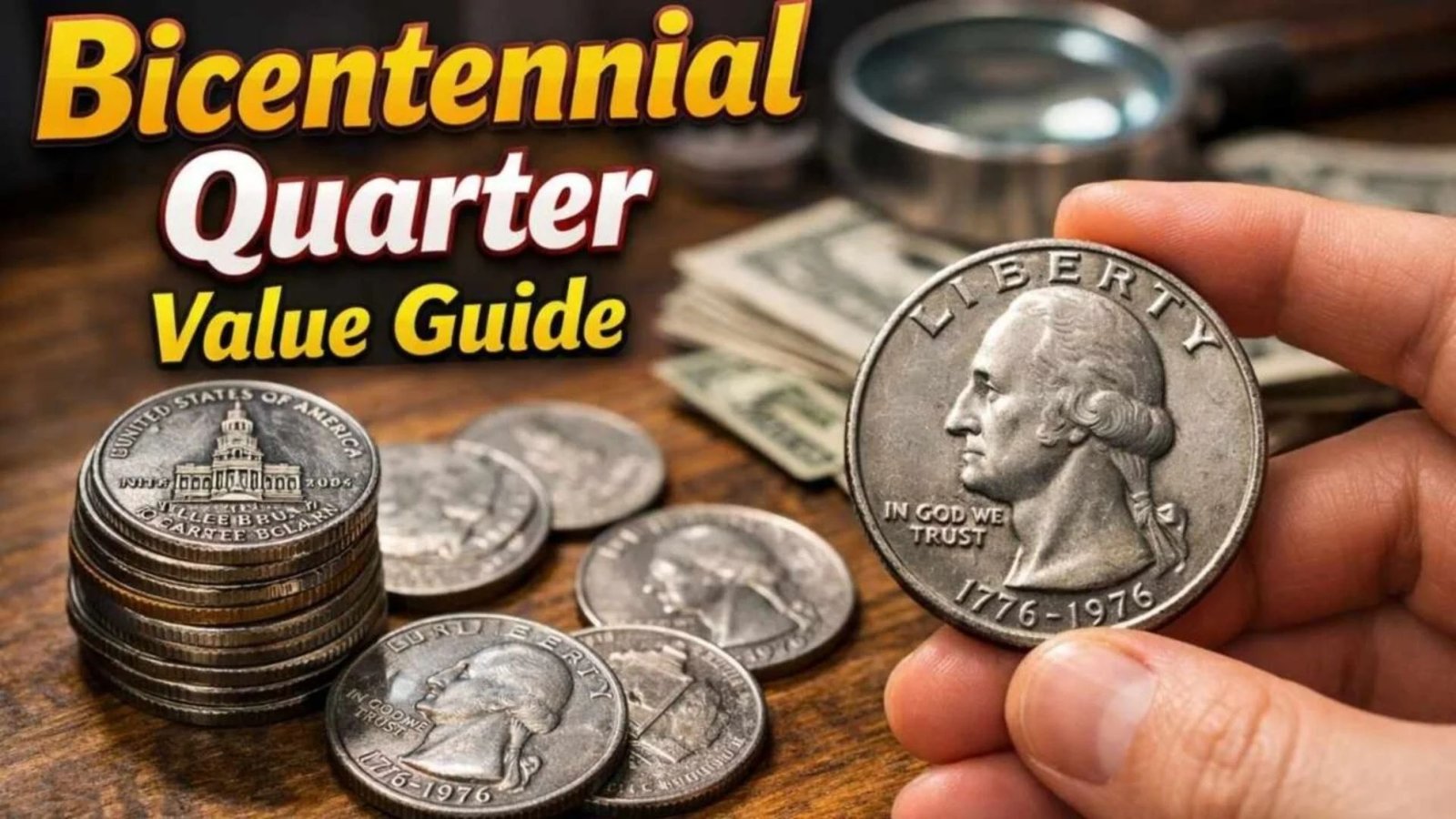
The Bicentennial Quarter Value Guide: Rare 1776–1976 Coins for Collectors & Investors is a fascinating dive into one of America’s most iconic modern coins. Ever pulled a quarter from your pocket with “1776–1976” and a colonial drummer boy on the back? Most people think it’s just change, but some versions — especially rare ones — can be worth hundreds or even thousands to collectors and investors. Stick around as we break down the history, what makes them valuable today, and how to spot a potential gem in your collection. You might have a small fortune hiding in loose change!
What Is the Bicentennial Quarter?
The 1776-1976 Bicentennial Quarter is a special edition Washington quarter released to celebrate America’s 200th birthday. It features George Washington on the front and a colonial drummer boy on the reverse, replacing the usual eagle. Minted in 1975 and 1976 (but dated 1776-1976), it came in clad (copper-nickel) for circulation and 40% silver for collectors.
History and Origin of the 1776-1976 Quarter
In 1973, Congress approved special designs for the quarter, half dollar, and dollar to mark the U.S. Bicentennial. The quarter’s reverse was designed by Jack L. Ahr, showing a drummer in colonial attire with “E PLURIBUS UNUM” and stars. Production ramped up massively — over 1.6 billion clad quarters from Philadelphia (no mint mark) and Denver (D), plus San Francisco (S) versions in clad proof and silver. This made it one of the most produced U.S. coins ever.
Why These Coins Are Valuable Today
Most circulated Bicentennial quarters are worth face value (25 cents), but rarity kicks in with condition, composition, and errors. High-grade uncirculated examples, silver versions, and mint errors fetch premiums. Collectors love them for historical appeal, while investors eye silver content and auction records — some top sales hit $19,000+ for pristine silver pieces.
How to Engage With or Benefit From Bicentennial Quarters
Start by checking your coins: Look for mint marks (P no mark, D, S), silver versions (heavier, often from sets), and errors like doubled dies. Grade them via PCGS or NGC for accuracy. Sell on eBay, auctions, or to dealers if valuable. Or build a set — they’re affordable entry points into rare coin collecting.
Notable Facts and Statistics
Over 1.6 billion clad quarters were minted, but only 11 million business strike silver and 4 million silver proofs. A top-grade 1976-S silver quarter once sold for $19,200. Circulated clad? Usually $0.25–$1.50.
Here’s a quick value comparison:
| Coin Type | Condition | Approximate Value Range |
|---|---|---|
| Clad (P or D) | Circulated | $0.25 – $1.50 |
| Clad (P or D) | Uncirculated (MS65+) | $1 – $10+ |
| 40% Silver (S) | Uncirculated | $4 – $10 (silver melt + premium) |
| 40% Silver Proof (S) | High Grade (PR69+) | Hundreds to $13,500+ |
| Rare High-Grade Clad | MS68+ | Up to $4,750+ |
Expert Tips for Collectors and Investors
Examine under magnification for errors like doubled dies (look at “LIBERTY” or date). Silver versions weigh more (about 6.25g vs 5.67g clad). Store in holders to preserve condition. Get rare ones certified — it boosts resale value. Start small: Hunt rolls or pocket change for fun!
Common errors and varieties that spike value:
| Error/Variety | Description | Potential Value Range |
|---|---|---|
| Doubled Die Obverse (DDO) | Doubling on letters/date | $200 – $1,000+ |
| Double Denomination | Struck on wrong planchet (e.g., dime) | $9,000+ |
| Off-Center Strike | Misaligned design | $50 – $500+ |
| No Mint Mark Errors | Rare anomalies | Varies, up to thousands |
| Filled Mint Mark | D mint mark filled | $5 – $50+ |
Frequently Asked Questions (FAQs)
Are all 1776-1976 quarters rare?
No — most are common and worth face value unless in top condition or with errors.
How do I tell if my Bicentennial quarter is silver?
Silver versions are from San Francisco (S mint mark) and heavier; check a scale or acid test.
What’s the most valuable Bicentennial quarter?
High-grade 1976-S silver proofs or major errors, with sales up to $19,200.
Where can I sell a valuable one?
eBay, coin shows, or certified auction houses like Heritage or GreatCollections.
Conclusion
The 1776-1976 Bicentennial Quarter blends history, patriotism, and real collecting potential. While billions exist, the rare high-grade, silver, or error examples make them exciting for hobbyists and investors alike. Grab a magnifying glass, check your change jar today — you never know what treasure awaits. Share your finds in the comments, hunt for more rare coins, or dive into other U.S. commemoratives. Happy collecting!